
Save Money on Your Home Energy Costs This Winter in Just Three Easy Steps

Save Money on Your Home Energy Costs This Winter in Just Three Easy Steps It doesn’t matter if you heat your home with electricity, natural gas or some other energy source; prices continue to rise and that means increased heating costs for most of us.
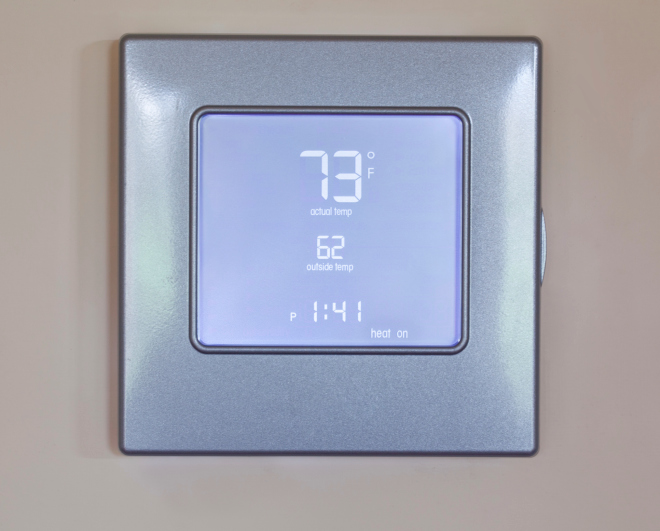
In today’s blog post we’ll share three easy ways that you can save money on your home energy costs this winter.

Install and Use Programmable Thermostats

Now that Nest and other companies have brought Wi-Fi enabled, programmable thermostats on the market there’s very few excuses to avoid using them. At bare minimum you’ll want a digital thermostat that can be programmed to turn on and off at certain hours of the day.

For example, you can shut your heat off after leaving for work and have it turn back on again a half-hour or so before you get home. You can do the same at night when you’re fast asleep under warm blankets. If possible, try to get a thermostat for each room so that rooms can be heated individually as needed.

Switch Up Your Ceiling Fans

If you have ceiling fans you may not know that by reversing their direction you can keep your rooms feeling much warmer. In the winter you’ll want your fans spinning in a clockwise direction, which will push warm air downward into the room where you’ll be able to feel it. In the summer you’ll want to switch the fans back to counter-clockwise as this will help move warm air towards the ceiling.

Check Your Insulation, Furnace and Ducts Now

Finally, you’ll want to check that your home heating system is operating at peak efficiency. If you can access your attic, check to ensure that your insulation is tightly packed and that it’s still in good condition. Clean or replace the air filter on your furnace, and check your ducts for any leaks that need to be repaired. If it has been a few years, consider having a professional furnace and duct cleaning to get all of the dust and debris out of the ductwork.

As you can see, a little time spent on home maintenance can end up saving quite a bit in energy costs when the temperatures drop. When you’re ready to look at buying a newer, more energy-efficient home, contact your local real estate agent and book a consultation where you can share your needs and price range.
3 Tips To Get The Most Out Of Your Plumbing

Get The Most Out Of Your PlumbingEveryone wants their pipes to last as long as possible, but there are a couple of simple problems that might be sucking the life out of your plumbing. Long-term stress is the enemy when it comes to your water system.

The three most common enemies are high water pressure, mineral-laden hard water, and grease. Avoid these three mistakes, and your water system will last years longer.

Take The Pressure Off Your Pipes

You might enjoy high water pressure when you’re taking a shower, but your pipes aren’t enjoying it at all. Over time, this high pressure stresses your plumbing system and can lead to leaks.

Is your high-pressure shower worth an expensive plumbing leak? To test your water pressure, you’ll have to hire a professional. Proper pressure should be somewhere between forty and eighty pounds per square inch.

To have a plumber reduce your water pressure should cost no more than about three or four hundred dollars. That sounds expensive, but it’s a lot cheaper than a leak.

Soft Water Is Good Water

If your water has a lot of minerals dissolved it, then it’s known as hard water. If you don’t already have a water softener you should consider it, because over time, those minerals will build up in your plumbing.

Eventually this will lead to a leak, so nip the problem in the bud, and look into getting a water softener. A good water softener should cost around five hundred dollars.

Hard water also makes soaps and detergents less effective. Soft water will get your clothes, your dishes, and even your hair cleaner.

Cease The Grease

Don’t ever pour cooking grease down the drain. It might be liquid when you pour it, but after a while, it will cool and solidify in your pipes. This won’t break the plumbing and cause a leak, but it will clog it all up.

The water that goes down afterward won’t do anything to wash away the sticky grease. You don’t want your pipes backing up, trust me. That is one messy problem.

Instead pour your grease into containers and throw it away in the garbage. Even better, go ahead and save it in the pantry and cook with it later.

Indoor plumbing is one of the most convenient technologies we have. So don’t take it for granted. Take care of your plumbing, and get the most out of it.

Avoid excessive water pressure, get a water softener, and don’t pour any grease down the drain. A little care now will go a long way. No one wants to deal with a plumbing leak. They’re expensive and a huge hassle.

Top 10 Indoor Houseplants For Your Air Quality

Top 10 Indoor Houseplants For Your Air QualityHouseplants are great for decorating. They can brighten up any room. Plus, houseplants can increase the air quality in a room. That makes you happier, healthier and reduces stress.

Speaking of stress, these plants won’t create any at all. All of the plants on this list are great at producing oxygen and require very little care.

10. Heartleaf Philodendron

A tough plant that’s a good filter for toxins like formaldehyde, Heartleaf Philodendron makes a great houseplant. The only downside is that it’s toxic to eat, so it may not be the best choice for those with kids or pets. But if you can control your appetite, the Heartleaf Philodendron is an excellent indoor houseplant for air quality.

9. Snake Plant

Also called Mother-in-Law’s Tongue, the Snake plant thrives in the bathroom. It loves the steamy conditions and can do without much light. It’s a great air filter as well.

8. Bamboo Palm

It thrives indoors and requires little maintenance. The Bamboo Palm even produces flowers and berries.

7. Red-edged Dracaena

Another great air filter, the Red-edged Dracaena is interesting because of its size. It can grow all the way to the ceiling. This beast of an oxygen-producing plant makes a great addition to the living room.

6. Chinese Evergreen

This is one of the prettier options. With interesting leaf colorings as well as berries and blooms, the Chinese Evergreen will contribute to your décor as well as your air quality.

5. Peace Lily

The Peace Lily only needs water about once a week. This is a great houseplant for air quality, and it’s easy to care for.

4. Devil’s Ivy

This air purifier looks great in a basket. Try hanging it in the garage.

3. English Ivy

English Ivy is an excellent filter plant. It’s been shown to filter out formaldehyde, which can be found in some cleaning products, and it even filters fecal matter particles (I bet you didn’t even know there were any of those in your house). English Ivy is an invasive species though. It’s fine to keep inside as a houseplant, just make sure it doesn’t end up in the yard.

2. Weeping fig

A type of Ficus, this is a great houseplant for air quality. It’s a bit bigger than the others though. It would fit best in the living room.

1. Spider Plant

The Spider plant is nearly impossible to kill. Even if you’ve been a plant murderer in the past, try this one. It will do wonders for your air quality, and I promise you won’t kill it.

Houseplants have been shown to reduce stress in the home. Combine that with higher air quality and your quality of life can be greatly improved with the help of a new green friend.

Even if you don’t have a green thumb, you can take care of these. These are great houseplants for air quality.