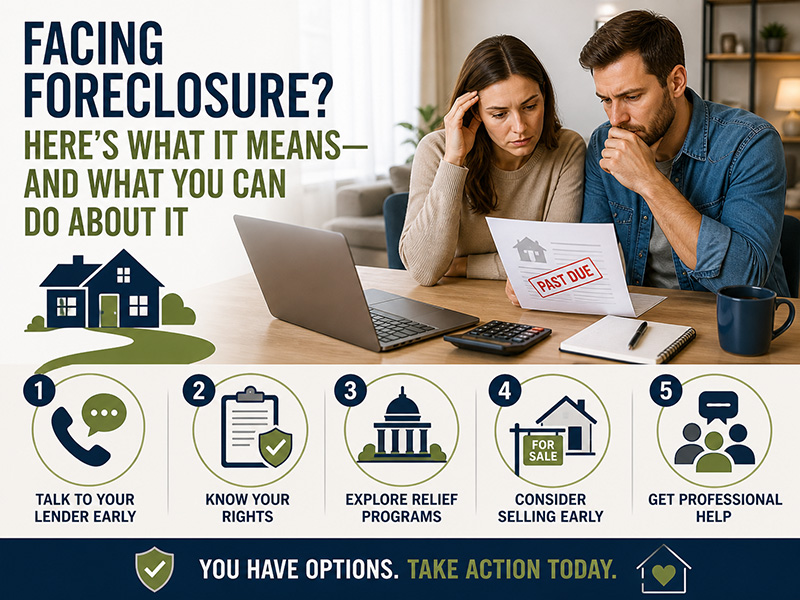
Facing Foreclosure? Here’s What It Means–and What You Can Do About It

If you’re a homeowner, foreclosure is one of those things you hope you never have to think about. But if payments start getting tight, it can suddenly feel very real—and very overwhelming.
The good news? Foreclosure doesn’t happen overnight, and you usually have more options than you think.

Let’s break down what’s actually happening and what you can do to stay ahead of it.

What Is Foreclosure (Really)?

Foreclosure is the process a lender uses to recover the money they loaned you if mortgage payments stop.

In simple terms:
If payments aren’t made over time, the lender can take legal steps to sell the home and recover what’s owed.

It sounds intense—and it is—but it’s typically a process, not a single event. And that process creates opportunities to act before things escalate.

How the Process Usually Unfolds

While timelines vary by state, foreclosure generally follows a pattern:

  • Missed payments begin to add up
  • You receive notices from your lender
  • A formal notice of default may be issued
  • There’s a window of time to catch up or make arrangements
  • If unresolved, the home may eventually be sold

The key takeaway: there’s usually a gap between “things are slipping” and “you’re out of options.”

That gap is where your leverage is.

5 Smart Ways to Avoid Foreclosure

1. Talk to Your Lender Early (Not Late)

This is the one people avoid—and it’s the one that helps the most.

Lenders don’t want to foreclose. It’s expensive and time-consuming for them too. If you reach out early, they may offer options like:

  • Payment plans
  • Loan modifications
  • Temporary forbearance

The earlier the conversation happens, the more flexibility you’ll have.

2. Get Clear on Your Timeline

Uncertainty makes everything feel worse.

Take the time to understand:

  • How many payments you’ve missed
  • What notices you’ve received
  • What your state’s foreclosure timeline looks like

Knowing where you stand helps you move from panic → strategy.

3. Look Into Relief & Assistance Programs

There are often programs—federal, state, or local—that can help bridge the gap.

These may include:

  • Refinancing options
  • Payment assistance
  • Temporary hardship programs

Some come and go depending on the economy, so it’s worth checking what’s currently available.

4. Consider Selling Before It Becomes Urgent

If keeping the home isn’t realistic long-term, selling before foreclosure can protect your finances and your credit.

It also gives you:

  • More control over timing
  • A better chance at maximizing value
  • A cleaner transition overall

Waiting too long can limit your options, so this is one to think about early, not last-minute.

5. Talk to a Professional (You Don’t Have to Navigate This Alone)

There are people whose entire job is to help in situations like this.

That might include:

  • A HUD-approved housing counselor
  • A real estate professional
  • A financial advisor

Getting guidance can help you see options you might not have considered and take some of the pressure off figuring it all out solo.

The Bottom Line

Foreclosure is serious, but it’s not instant, and it’s not inevitable. The biggest difference-maker? Taking action early.

Even small steps—like making a phone call or reviewing your options—can shift things in your favor and give you more control over what happens next.

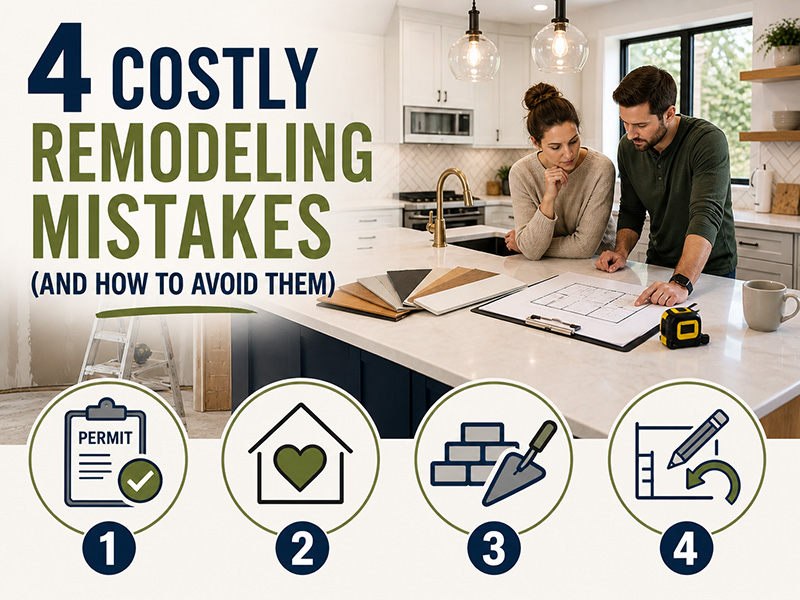
4 Costly Remodeling Mistakes (and How to Avoid Them)

Remodeling your home can be one of the best ways to increase its value—and make your space actually work for your life. But let’s be honest: it can also go sideways fast if you’re not careful.

Whether you’re tackling a small update or a full renovation, avoiding a few common pitfalls can save you time, money, and a whole lot of stress.

Here are four mistakes homeowners make all the time, and how to steer clear of them.

Mistake #1: Skipping Permits (or Hoping No One Notices)

It’s tempting to skip permits to save time or money, but this is one of those shortcuts that can come back to bite you.

Unpermitted work can:

  • Delay or derail a future home sale
  • Lead to fines or required tear-outs
  • Create safety risks if work isn’t up to code

What to do instead:
Before you start anything, check your local city or county requirements. A quick call or website visit can save you from a much bigger headache later.

Mistake #2: Designing for Trends Instead of Your Life

It’s easy to fall in love with what’s trending—open shelving, bold tile, ultra-modern everything. But trends don’t always age well… or function well.

The real question is: does this actually work for how you live?

What to do instead:
Design around your daily habits first.

  • Do you cook often? Prioritize storage and workflow.
  • Hate clutter? Maybe skip open shelving.
  • Have pets or kids? Choose durable, forgiving materials.

Trends can be layered in, but your lifestyle should lead the decisions.

Mistake #3: Cutting Corners Where It Counts

Everyone has a budget, but going cheap in the wrong places can cost you more in the long run.

Low-quality materials and inexperienced labor can lead to:

  • Repairs sooner than expected
  • Hidden damage (like moisture issues or poor insulation)
  • A finish that just… doesn’t hold up

What to do instead:
Spend wisely, not blindly.
Invest in:

  • Skilled, reputable contractors
  • Structural and behind-the-scenes components
  • Materials that will actually last

If something is meant to protect your home (like waterproofing or electrical work), that’s not where you want to bargain hunt.

Mistake #4: Making Changes Mid-Project

This is the silent budget killer.

Changing plans once a project is underway often means:

  • Reordering materials
  • Paying for additional labor
  • Delaying timelines (sometimes significantly)

Even small tweaks can ripple into bigger costs.

What to do instead:
Take your time before the project starts. Finalize your design, materials, and layout as much as possible.

Think of it like this: decisions made early are cheap—decisions made mid-project are not.

Plan Smart, Remodel Better

A successful renovation isn’t about perfection. It’s about making thoughtful, informed decisions from the start. By avoiding these common mistakes, you’ll not only protect your investment—you’ll end up with a space that actually works for you long-term.

And if you’re planning to sell down the road, smart upgrades (done the right way) can make a big difference in how your home is both perceived and valued.

How to Evaluate Property Taxes and What You Need to Know Before You Buy

Retirement is a significant milestone in one’s life, symbolizing the culmination of years of hard work and dedication. As individuals approach this stage, meticulous planning becomes imperative to ensure a comfortable and financially secure future. Among the plethora of retirement planning options, real estate emerges as a challenging player, offering unique advantages that can enhance the overall strategy. Let’s discuss the pivotal role that real estate plays in retirement planning and why it deserves a prominent place in your financial portfolio.

Building Equity for the Future:

One of the fundamental advantages of investing in real estate is the potential for equity growth over time. Unlike other assets that may fluctuate in value, real estate often appreciates in the long run. By acquiring property early in your career and allowing it to accumulate value, you’re essentially building a robust foundation of equity that can serve as a valuable financial resource during retirement.

Steady Income Stream through Rental Properties:

Real estate’s ability to generate a steady income stream is a crucial factor in retirement planning. Owning rental properties allows retirees to enjoy a regular source of passive income, supplementing other retirement income streams such as pensions or social security. Well-managed rental properties can provide a reliable and predictable cash flow, ensuring financial stability throughout retirement.

Diversification for Risk Mitigation:

Diversification is a key principle in any successful investment strategy, and real estate offers an excellent avenue for achieving it. By diversifying your retirement portfolio to include real estate assets, you can spread risk and reduce vulnerability to market fluctuations. Real estate’s performance often exhibits low correlation with traditional financial markets, providing a hedge against economic downturns and uncertainties.

Hedging Against Inflation:

Inflation erodes the purchasing power of money over time, posing a significant threat to retirees. Real estate, however, has historically proven to be an effective hedge against inflation. Property values and rental income tend to rise with inflation, ensuring that the real value of your real estate assets remains relatively stable over the long term.

Downsizing and Lifestyle Adjustments:

Real estate plays a dynamic role in retirement planning by offering options for downsizing or making lifestyle adjustments. Retirees can leverage the equity built in their properties by selling and downsizing to a smaller, more manageable home. This not only releases funds for retirement expenses but also reduces maintenance costs and property taxes.

As individuals navigate the intricate landscape of retirement planning, embracing the role of real estate can significantly enhance their financial well-being. From building equity and generating passive income to providing a buffer against inflation, real estate stands as a versatile and resilient asset class. Including real estate in your retirement portfolio offers not only financial benefits but also the peace of mind that comes with a diversified and well-rounded approach to securing your future.