
Existing Home Sales Dip More Than Expected

The 3 Golden Rules of Staging - Follow These and Sell Your Home FasterNovember sales of pre-owned homes dipped lower than expected and prior month’s readings according to the National Association of Realtors® (NAR). Analysts expected existing home sales to slow to a seasonally-adjusted annual rate of 5.30 million sales, which was based on October’s reading of 5.32 million sales. Instead, November’s reading dropped to 4.76 million sales. November’s drop represented a decline of 10.50 percent drop in existing home sales month-to-month; existing home sales were 3.80 percent lower year-over-year.

November’s reading represented the first time since September 2014 that the year-over-year reading for sales of pre-owned homes was lower than for the previous month. November’s reading was also the sharpest dip in pre-owned home sales since July 2010 and was cited as a “statistical anomaly.” Such a sharp drop in sales is unusual except when housing tax credits expire and cause home sales to drop after a last minute increase in home purchases by home buyers rushing to gain a tax credit advantage.

Tight Supply of Homes, New Regulations Cited as Cause for Lower Sales

A lean supply of available homes has caused rising demand for homes in 2015; an inadequate supply of homes typically causes prices to rise and sales to fall as affordability decreases. First-time buyers accounted for 30 percent of all home buyers in November, but the first-time buyers usually account for 40 percent of buyers. The national average home price rose to $220,300 in November, which represents a year-over-year increase of 6.30 percent. Home prices are rising faster than wages, which presents a major obstacle for would-be home buyers.

There was a 5.1 month supply of existing homes for sale in November, while the average supply is six months. Lawrence Yun, NAR’s chief economist, said that new regulations that increased the closing period for many home sales may have pushed more sales into December that otherwise would have closed in November.

Distressed property sales involving bank-owned homes and short sales increased in November, but this was due to financial institutions offering more homes for sale than in previous months. Analysts said that the increase in distressed sales did not represent an increase in mortgage default and foreclosure rates.

NAR forecasts that existing home sales will reach 5.20 million during 2016; this represents an increase of 2.90 percent. Upcoming reports on new and pending home sales will help provide a general picture of housing market trends as 2015 winds down.
What’s Ahead For Mortgage Rates This Week – December 21, 2015

Whats Ahead For Mortgage Rates This Week December 21 2015Last week’s scheduled economic reports included the NAHB Housing Market Index, Housing Starts, FOMC statement and Fed Chair Janet Yellen’s press conference. In addition to weekly reports on jobless claims and mortgage rates, inflation reports were also released.
Builder Confidence Slips, Housing Starts Increase

According to the NAHB / Wells Fargo Housing Market Index for December, home builder confidence slipped by one point to a reading of 61 as compared to an expected reading of 63 and November’s reading of 62. December’s reading was three points higher year-over-year. Readings over 50 indicate that more builders than fewer are confident about housing market conditions. December’s confidence reading remained higher than 2015’s average reading of 59.

Components used in comprising the NAHB HMI also slipped in December. Builder confidence in current market conditions fell one point to a reading of 66; the six months sales outlook fell two points to 67 and the reading for buyer foot traffic in new developments also decreased by two points to a reading of 46. The reading for buyer foot traffic has consistently remained below the neutral benchmark of 50 since the housing bubble ended.

While builder confidence eased, housing starts rose in November with 1.17 million starts reported. Analysts expected a reading of 1.14 million starts based on October’s reading of 1.06 million housing starts. During much of 2015, demand for homes accelerated due to slim inventories of available homes; new construction is seen as essential to easing demand.

Fed Raises Interest Rates, Mortgage Rates Higher

The Federal Open Market Committee of the Federal Reserve raised its target federal funds rate from a range of 0.00 to 0.25 percent to a range of 0.25 percent to 0.50 percent. While the Fed’s increase is expected to affect consumer lending rates for auto loans and credit cards more than mortgages, Freddie Mac reported that rates for fixed rate home loans rose last week. The average rate for a 30-year fixed rate mortgage rose by two basis points to 3.95 percent and the average rate for a 15-year fixed rate mortgage increased by three basis points to 3.22 percent. The average rate for a 5/1 adjustable rate mortgage was unchanged at 3.03 percent. Discount points were unchanged for fixed rate mortgages at 0.60 percent and 0.50 percent respectively while average points for a 5//1 adjustable rate mortgage dropped to an average of 0.40 percent.

Weekly jobless claims fell to 271,000 new claims against expectations of 275,000 new claims and the prior week’s reading of 282,000 new claims.

What’s Ahead

Next week’s economic reports include reports on new and existing home sales, consumer spending and consumer sentiment. Weekly jobless claims and Freddie Mac’s mortgage rates report will also be released as scheduled. No reports will be released on Friday due to the Christmas holiday.

Federal Reserve Raises Short-Term Interest Rates

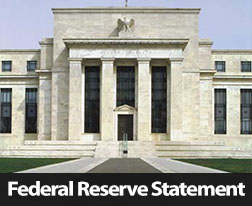
Federal Reserve Raises Short Term Interest RatesAfter prolonged speculation by economic analysts and news media, the Federal Open Market Committee of the Federal Reserve raised short-term interest rates for the first time in seven years. Committee members voted to raise the target federal funds rate to a range of 0.25 to 0.50 percent from a range of 0.00 to 0.25 percent to be effective December 17. The good news about the Fed’s decision is that the Central Bank had enough confidence in improving economic conditions to warrant its decision. But how will the Fed’s decision affect mortgage rates?

December’s FOMC statement cited improving job markets, increased consumer spending and declining unemployment as conditions supporting the Committee’s decision to raise the target federal funds rate. While inflation has not yet reached the Fed’s goal of two percent, FOMC members were confident that the economy would continue to expand at a moderate pace in spite of future rate increases. The FOMC said that the Central Bank’s monetary policy remained “accommodative.”

Little Impact Expected on Mortgage Rates after Fed Decision

The Fed’s decision to raise short-term rates likely won’t affect mortgage rates in a big way. The Washington Post quoted Doug Douglas, chief economist at Fannie Mae: “This one change, will in the larger scheme of things, will be unlikely to make a dramatic impact on what consumers will feel.”

Mortgage rates, which are connected to 10-year Treasury bonds, may not rise and could potentially fall. While the interest rate increase could increase yields on these bonds, analysts say that multiple factors impact 10-year Treasury bonds, so a rate increase is not set in stone for mortgage rates.

Rising Mortgage Rates Would Impact Affordability and Cost of Buying Homes

Higher mortgage rates could sideline some first-time and moderate income home buyers and would also increase the long-term cost of buying a home. Interest rates on vehicle loans and credit cards are more closely tied to the Fed rate and may rise according to current and future Fed rate hikes. Rising consumer interest rates indirectly impact housing markets as prospective home buyers face higher debt-to-income ratios caused by higher interest rates on car loans and credit card balances.

During a press conference following the Fed’s announcement, Fed Chair Janet Yellen emphasized that future rate increases would be “gradual.” Chair Yellen said that the Fed’s decision reflects the agency’s confidence in an economy that is on a path of “sustainable improvement.” When questioned about inflation rates, Chair Yellen said that the Fed will closely monitor both expected and actual changes in the inflation rate.